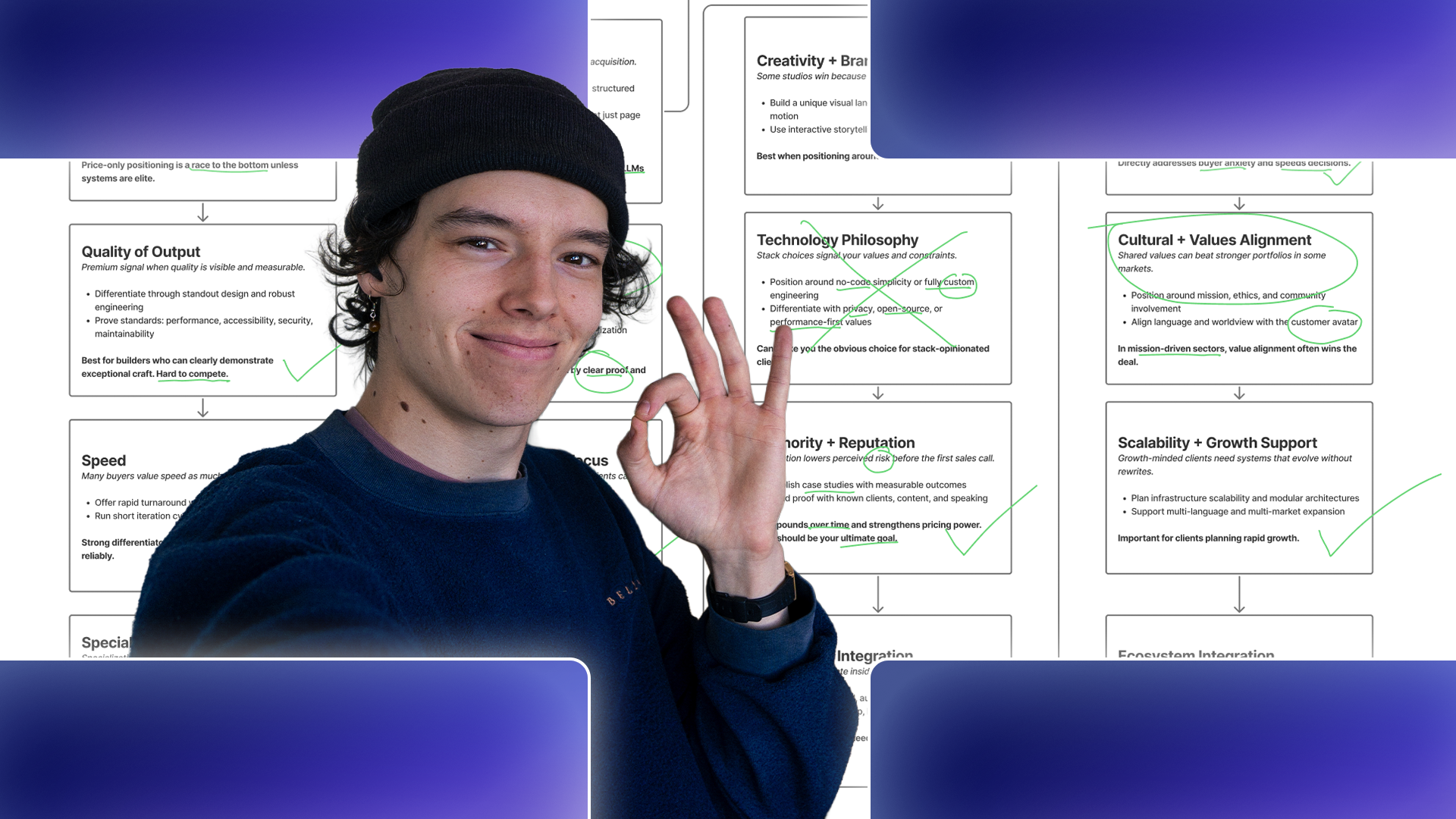
Competition in this industry is multi-dimensional
Most web design and development companies frame competition too narrowly. They compare rates, portfolio polish, or tech stack, then wonder why sales cycles stay long and leads stay inconsistent.
In reality, firms can compete across dozens of variables at once. Durable advantage usually comes from stacking a coherent combination of strengths, not being marginally better at one thing.
Below is a practical breakdown of 20 dimensions you can use to position your company more clearly.
1) Price
Price is the most visible differentiator, but not the only one. You can compete on affordability, predictability, or payment structure.
- Lowest-cost or budget-first positioning
- Transparent flat pricing
- Performance-based pricing
- Subscription or retainer model
- Bundled services
- Flexible payment terms
2) Quality of Output
Quality can be a hard premium signal when it is specific, measurable, and visible in shipped work.
- Design excellence
- Engineering robustness
- Performance optimization
- Accessibility standards (WCAG)
- Security hardening
- Code maintainability
- Scalability architecture
3) Speed
Many buyers value speed as much as output quality, especially in product, campaign, and launch contexts.
- Rapid turnaround
- MVP-first approach
- Same-day or same-week builds
- Fast iteration cycles
- Agile sprint delivery
4) Specialization and Niche Focus
Specialization shortens sales cycles because prospects immediately see fit.
- Industry specialization (healthcare, agriculture, SaaS)
- Platform specialization (Shopify, WordPress, headless CMS)
- Technical stack specialization
- Geographic specialization
- Audience specialization (creators, farmers, startups)
5) Technical Depth
Technical depth matters most when clients need complex systems, not only marketing pages.
- Custom-coded builds versus templates
- Advanced integrations (CRM, automation, payments)
- API architecture
- Headless CMS implementations
- Complex database logic
- DevOps and deployment pipelines
6) Performance and SEO
When performance and search are core acquisition channels, this can become a major positioning axis.
- Core Web Vitals optimization
- Technical SEO architecture
- Structured data implementation
- Conversion rate optimization (CRO)
- Page speed guarantees
7) Strategy and Consulting
Firms that guide decisions, not just execution, often command higher margins and stronger client trust.
- Brand positioning
- Messaging refinement
- UX research
- Customer journey mapping
- Funnel architecture
- Growth strategy
- Monetization strategy
8) Conversion and Revenue Focus
This is where design and development are tied directly to business outcomes.
- Data-driven design decisions
- A/B testing systems
- Analytics setup and reporting
- Sales funnel integration
- Lead generation optimization
- E-commerce revenue optimization
9) Customer Experience
How it feels to work with your company is often as important as final output.
- Communication clarity
- Responsiveness
- Dedicated account manager
- White-glove onboarding
- Ongoing education
- Client portal transparency
10) Process and Reliability
Buyers reduce risk when they see a mature process with predictable execution.
- Clear project roadmap
- Predictable timelines
- Structured onboarding
- Documentation standards
- Post-launch support
- Maintenance plans
- Service-level agreements (SLAs)
11) Creativity and Brand Differentiation
Some firms win because their work feels unmistakable and culturally relevant.
- Unique design language
- Strong art direction
- Motion design
- Interactive storytelling
- Award-winning portfolio
- Trend leadership
12) Technology Philosophy
Technology choices signal values and constraints. For some clients, philosophy is a deciding factor.
- No-code or low-code simplicity
- Fully custom codebases
- Open-source commitment
- Privacy-first builds
- Sustainability-focused hosting
- Performance-first engineering
13) Authority and Reputation
Reputation lowers perceived risk before the first call ever happens.
- Case studies with measurable outcomes
- Recognizable clients
- Industry awards
- Thought leadership
- Educational content
- Speaking engagements
14) Ecosystem Integration
Websites increasingly sit inside larger operating systems. Integration depth is now a competitive edge.
- Marketing automation integration
- CRM integration
- Email systems integration
- Payment systems integration
- Membership systems integration
- LMS integration
- ERP integration
15) Long-Term Partnership
Project revenue is transactional. Partnership revenue is compounding.
- Retainer relationships
- Ongoing optimization
- Roadmap planning
- Quarterly strategy reviews
- Technical audits
- Continuous improvement cycles
16) Risk Reduction
Clients buy certainty. Your ability to reduce technical and commercial risk can be a direct differentiator.
- Guarantees
- Performance benchmarks
- Secure coding standards
- Legal compliance integration (GDPR, accessibility)
- Backup and disaster recovery planning
17) Cultural and Values Alignment
Values alignment is often underestimated, especially in mission-driven sectors.
- Mission-driven positioning
- Ethical design principles
- Local business support
- Industry community involvement
- Shared worldview with clients
18) Scalability and Growth Support
Clients planning growth need systems that can evolve without expensive rewrites.
- Startup-to-scale support
- Internationalization (multi-language, multi-currency)
- Infrastructure scalability
- Modular component systems
19) Education and Empowerment
The best partnerships increase client capability, not dependence.
- Client training
- Documentation libraries
- Video walkthroughs
- CMS usability optimization
- Internal team enablement
20) Innovation
Innovation works when it is applied to real business constraints, not novelty for its own sake.
- AI integrations
- Experimental interfaces
- Emerging technology adoption
- Proprietary tools or frameworks
Strategic insight: stack advantages, do not chase one-axis competition
Most successful firms compete using a coherent mix of four areas: positioning (who they serve), technical depth (how they build), business impact (the results they create), and client experience (how collaboration feels).
Price is only one axis. Durable differentiation typically comes from stacking three to five dimensions that reinforce each other. This creates clearer positioning, stronger referrals, better-fit clients, and healthier margins.
If your company feels hard to describe, start by choosing three dimensions to lead with. Then make them visible in your offer, process, proof, and messaging.
Build your agency positioning system
Use our free tools and guides to sharpen your offer, improve pricing, and turn positioning into pipeline.
Free resources for freelancers and studios